Last updated: November 2, 2026 · By Sanket Goyal
Here is how to check if a product is recalled: note the exact brand, model name and batch or serial number, then search the official database that covers that kind of product. In the US that means Recalls.gov for most things, the CPSC for household goods, NHTSA for cars and car seats, and the FDA for food, medicine and supplements. Ten minutes is usually enough.
Most of us never do this. A recall notice arrives in the post, or it does not, and the heater stays plugged in. That is a risky way to run a home. Notices go to registered owners, and plenty of things are bought without ever being registered, from a second-hand dresser to a power bank bought on a sale day.
So treat this like a small habit, not a panic. Below is the exact order I follow.
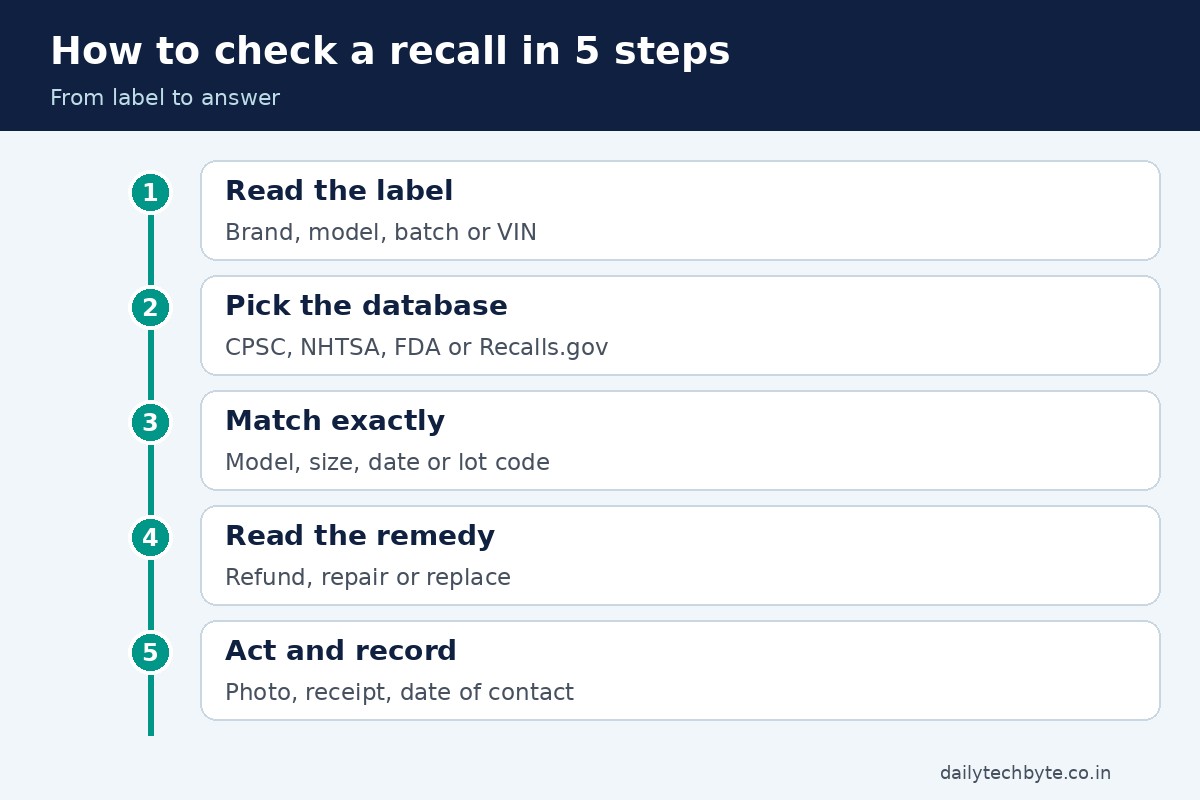
Step 1: Write down what you actually own
A recall almost never covers “all kettles from that brand”. It covers specific models, sizes, colours or manufacturing dates. So the search only works if you have the right details.
Look for these on the product, its box, or the receipt:
- Brand and full model name or number
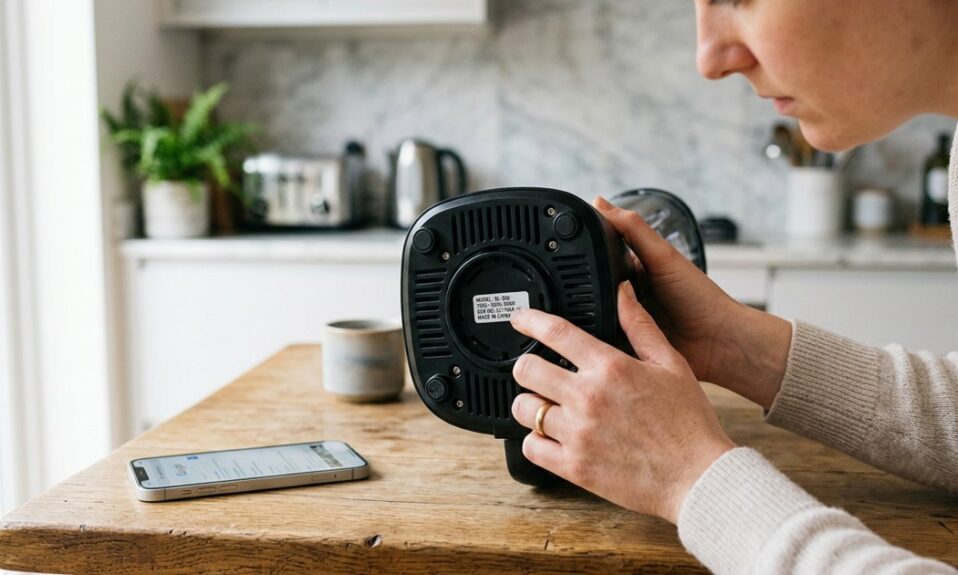
- Batch, lot or serial number (often a sticker on the back or base)
- Best-before or manufacturing date, for food and medicine
- Where and when you bought it
Take a photo of the label with your phone. If you ever need a refund, that photo and your receipt are your proof. Picture a shop owner who bought a dozen of the same fan for a small office: one photo of the label tells her whether all twelve are affected.
Step 2: Start at the one-stop federal site
Recalls.gov is a single place that pulls together recalls from six US federal agencies. It has separate sections for consumer products, motor vehicles, boats, food, medicine, cosmetics and environmental products, plus a search box and email alerts.
If you are not sure which agency handles your product, start there. Then go to the agency page below for the detail.
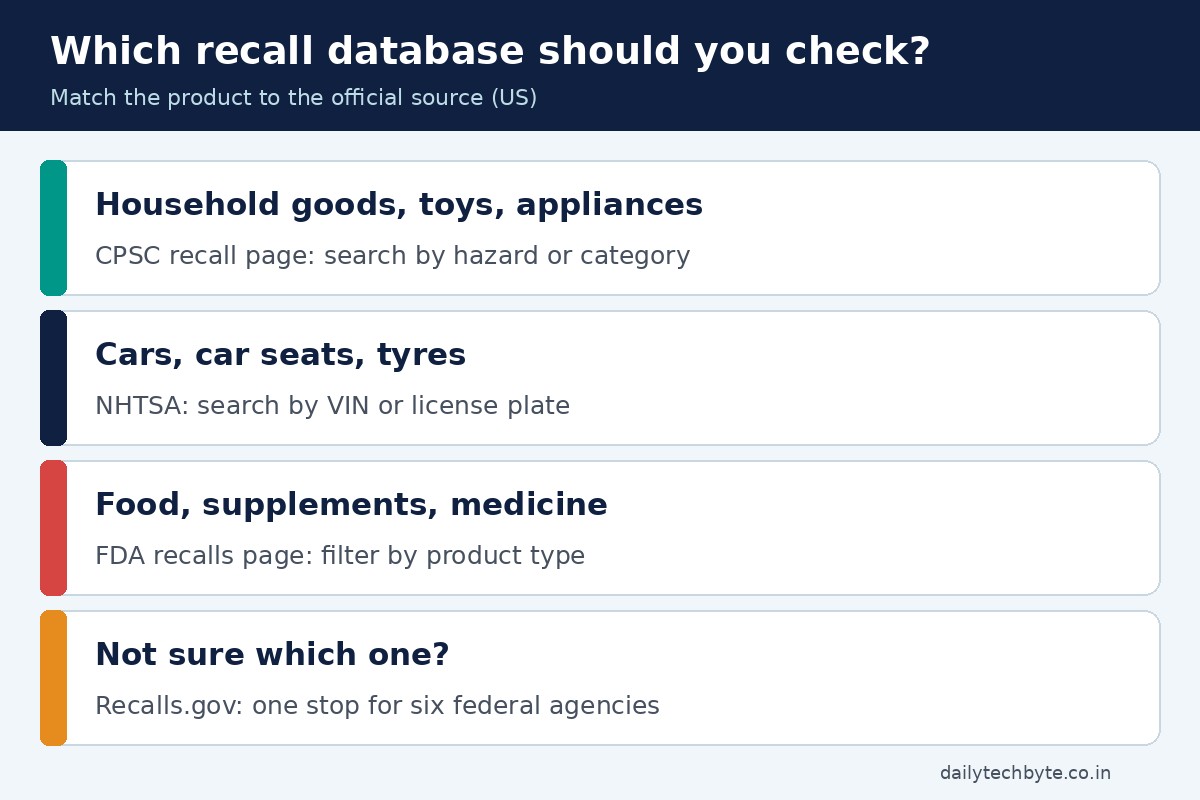
| Product type | Where to check (US) | What you can search by |
|---|---|---|
| Household goods, toys, furniture, appliances, power banks | CPSC recall page | Hazard, category, date |
| Cars, motorcycles, tyres, car seats | NHTSA recall page | VIN, license plate, brand and model |
| Food, supplements, medicine, cosmetics | FDA recalls page | Product type, brand, date |
| Not sure | Recalls.gov | Keyword, agency |
Step 3: Household products (CPSC)
The US Consumer Product Safety Commission keeps a searchable list of recalls and product safety warnings. You can filter by hazard, such as fire, burn, choking or electric shock, and by product category. The list covers everything from baby gear to space heaters.
Each notice tells you four useful things: the hazard, the remedy, roughly how many units were sold, and how to contact the company. Read the remedy line carefully. In the CPSC’s own figures for the last five years, a refund was offered in about 55 percent of recalls, a repair in around a quarter, and a replacement in around one in six. So the fix depends on the product, and it is often free.
Two things worth knowing:
- Recall versus warning. CPSC also posts product safety warnings. In the examples listed there, the advice is to stop using the item and dispose of it, with no company remedy attached. A warning is not a softer recall. Treat it as seriously.
- Proof of destruction. Many recent notices ask you to mark the product with the word “RECALLED” in permanent marker, take a photo, and send it to the company before you get the refund. Do not throw the item away before you have read the steps.
If you spot something dangerous that is not on the list, you can report it to the CPSC at SaferProducts.gov. Its hotline is 800-638-2772, open 8 a.m. to 5:30 p.m. Eastern.
Step 4: Cars, car seats and tyres (NHTSA)
For vehicles, you do not search by model alone. You use the VIN, the 17-character vehicle identification number. It sits on the lower left of the windshield, and it is also on your registration card and often on the insurance card. You can search by license plate too.
The result is plain. Either it lists an unrepaired recall, or it says “0 unrepaired recalls associated with this VIN”.
Here is the catch most people miss. A clean result does not always mean a clean car. The search does not show:
- Recalls that have already been repaired
- Some very recent recalls, because VINs are added over time
- Recalls older than 15 years, unless the maker offers longer coverage
- Recalls by small vehicle makers
- Non-safety campaigns from the manufacturer
- Recalls on vehicles built for other countries
So check again in a few weeks if the recall is brand new. NHTSA suggests registering your vehicle, tyres and car seats and checking for recalls twice a year. You can also check up to 100 VINs at once, which helps if you buy and sell used cars or look after a family fleet. There is a free phone app that sends alerts too.
When a recall applies, the manufacturer must tell registered owners by first-class mail within 60 days of telling NHTSA. The fix at a dealer is free. Remedies can be a repair, a replacement, a refund, or in rare cases a buy-back.
Step 5: Food, medicine and supplements (FDA)
The FDA’s recall page lists press releases about recalls of food, drugs, dietary supplements, medical devices, cosmetics and animal products. You can filter by product type.
Two honest limits. First, not every recall has a press release, so the page is not a full list. Second, you will see a “terminated recall” column. That means the FDA decided the company made all reasonable efforts to remove or fix the product. Recalls not marked terminated are either ongoing or completed, so the product on your shelf could still be affected.
For food, match three things: the brand, the product description and the lot or date code on the pack. A recall for one size or one date range does not cover the rest.
Sign up for the FDA’s recall emails if you buy a lot of packaged food or take regular supplements. For questions, the FDA’s number is 1-888-INFO-FDA (1-888-463-6332).
What if you live in India?
The agencies above are American, so they will not cover everything sold in India. What I can point to with confidence is the National Consumer Helpline run by the Department of Consumer Affairs. You can call 1915 toll free (8 AM to 8 PM) or message on WhatsApp at +91 8800001915 to register a grievance about a product or seller.
For anything you bought from an international brand, check the brand’s own safety notice page for your country. Then keep your bill and the label photo. If a seller refuses to act on a genuine safety problem, that paper trail is what you will need.
If the same model is sold in both countries, the US lists can still be a useful clue. Just confirm the model number matches exactly.
You found a match. Now what?
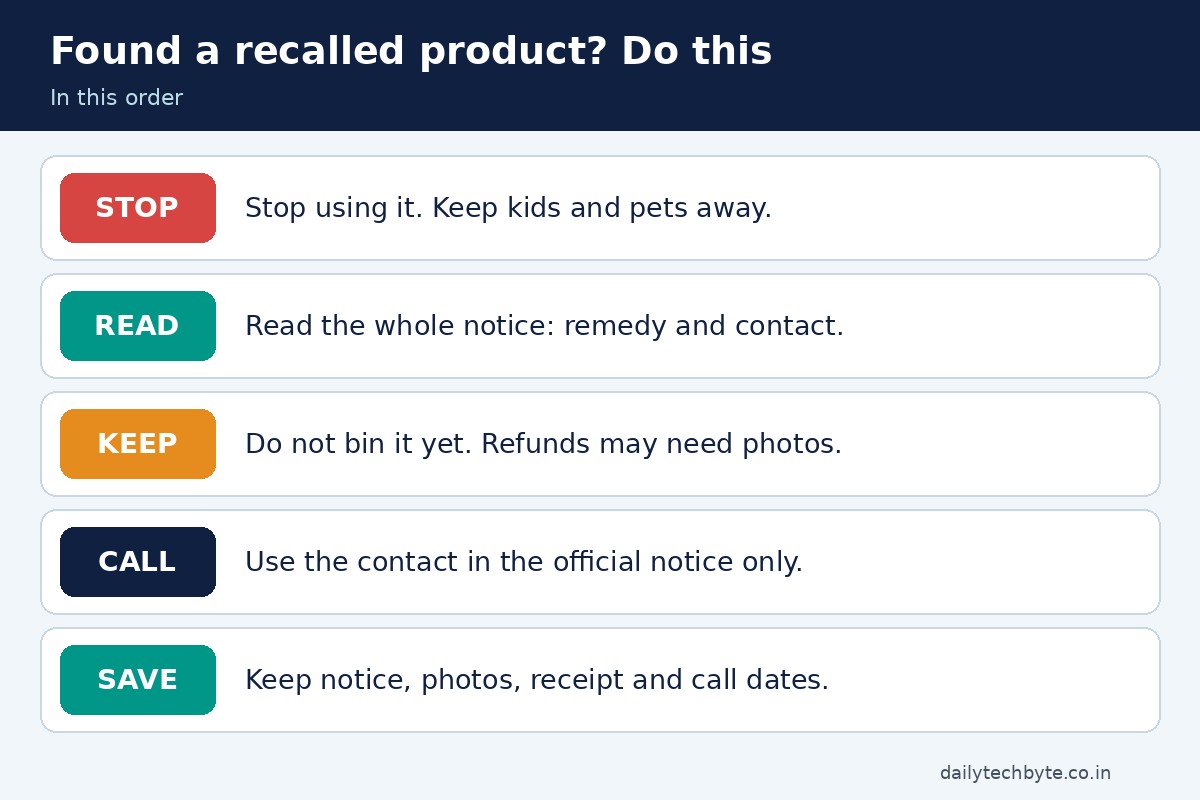
Do this in order, and do not skip the first line.
- Stop using it. Unplug it, take the battery out if you safely can, and keep children and pets away.
- Read the notice to the end. Note the remedy, the deadline if there is one, and the contact details.
- Do not throw it away yet. Many refund processes need photos first.
- Contact the company using the details in the official notice, not a link in a text message.
- Keep a record. Save the notice, your photos, your receipt, and the date you called or wrote.
A quick word on safety around batteries. If the recalled item is a power bank or anything with a lithium battery, do not charge it overnight while you wait for the refund. My guide on how to check if a power bank is allowed on a flight explains the warning signs of a failing battery, and those signs matter at home too.
Watch out for fake recall messages
Scammers follow the news. A text saying “your product has been recalled, click here for a refund” is a classic trick to steal card details. My rule is simple: never click. Go to the official database yourself and search there. If you gave out card or login details by mistake, my calm 48-hour plan for after a data breach shows what to do next.
My simple recall habit
- Take a photo of the label on anything you buy that plugs in, heats up, or goes near a baby.
- Register products and car seats when the maker offers it.
- Twice a year, search your car VIN and check the household list for your biggest appliances.
- Subscribe to one email alert for the category you care about most.
- When you buy second-hand, search the model before you pay.
None of this is exciting. That is the point. A recall check is like checking a smoke alarm battery: dull, quick and worth it.
FAQ
How do I check if a product is recalled?
Find the brand, model and batch number on the product. Then search the official database for that product type: the CPSC for household goods, NHTSA for vehicles and car seats, and the FDA for food, medicine and supplements. Recalls.gov brings several of these together.
Is there one website that lists all US recalls?
Recalls.gov is a one-stop site that pulls together recalls from six federal agencies. It has sections for consumer products, vehicles, boats, food, medicine, cosmetics and environmental products.
Does a clean VIN result mean my car has no recalls?
Not always. The search shows unrepaired recalls only. It does not show repaired ones, some very recent ones, recalls older than 15 years, or recalls from small vehicle makers.
Should I throw away a recalled product?
Not straight away. Stop using it, then read the notice. Many refund steps ask you to mark the product “RECALLED” and send a photo before you dispose of it.
Where can I complain about an unsafe product in India?
You can contact the National Consumer Helpline on 1915 (toll free, 8 AM to 8 PM) or on WhatsApp at +91 8800001915. Keep your bill, the label photo and any messages with the seller.