
Last updated: November 7, 2026 · By Sanket Goyal
To budget for Christmas gifts, pick one total you can pay from cash you already have, split it across people in three tiers, hold back about 10 percent as a reserve, and track every purchase against that total. Do this before you open a single shopping app. The order matters more than the maths.
Most holiday overspending is not one big mistake. It is forty small ones: a “while I’m here” add-on, a sale that felt too good, a gift for someone you forgot. A written plan stops that drift. Below is the exact method I use, a worked example you can copy, and a few traps to avoid.
Step 1: Choose one total first
Start from what you can spend, not from what people want. Look at your last two months of spare cash after rent, bills and savings. Pick a number that will not need a credit card to survive.
I like to include everything under that one number: gifts, wrapping, postage, cards, small hosting costs and travel to family. If it is not in the total, it will arrive later as a surprise.
Picture a night-shift nurse who has $600 spare for December. That $600 is the whole holiday gift pot. Not “$600 plus shipping”.
Step 2: List every person, then group them in tiers
Write the full list on one page. Include the people you only remember in the shop queue: a teacher, a neighbour, a delivery driver you tip each year.
Then sort them into three tiers:
- Tier 1: closest people, where a thoughtful gift matters most.
- Tier 2: good friends and wider family.
- Tier 3: colleagues, teachers, neighbours, where a small token is plenty.
Give each tier one price per person. One price per tier is the trick. It removes the daily argument with yourself about whether Aunt Rina deserves $5 more than your cousin.
Step 3: Do the maths and keep a reserve
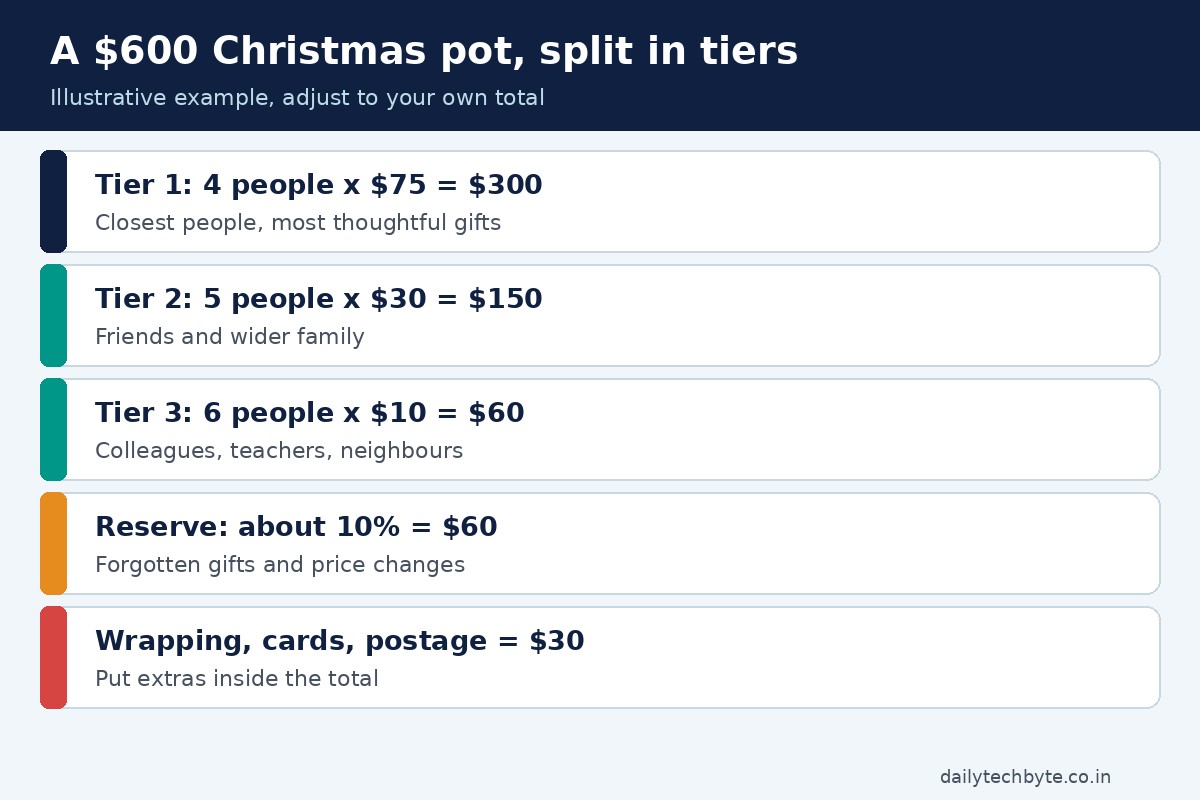
Here is a worked example for a $600 pot. These are my own illustrative numbers, not a recommendation for your family.
| Tier | People | Per person | Subtotal |
|---|---|---|---|
| Tier 1 (closest) | 4 | $75 | $300 |
| Tier 2 (friends and family) | 5 | $30 | $150 |
| Tier 3 (tokens) | 6 | $10 | $60 |
| Reserve (about 10%) | n/a | n/a | $60 |
| Wrapping, cards, postage | n/a | n/a | $30 |
| Total | 15 | $600 |
The reserve is the part people skip. It covers the gift you forgot, the price that went up, the colleague who gave you something first. If you do not use it, it goes back to savings in January. That is a nice feeling.
Step 4: Spread the cost over the weeks you have
If you are starting now, you have roughly seven weeks to the 25th. A $600 pot works out to about $86 a week. If you start in January for next year, the same pot is $50 a month over twelve months. That is the whole case for starting early: the same gifts, a much smaller bite.
You do not need an app. A single note on your phone works:
- Write the total at the top.
- Write each name with its tier price.
- After every purchase, type the real cost next to the name.
- Keep a running “left” number at the top.
I would rather you use a plain note you open every time than a clever spreadsheet you abandon after a week.
Step 5: Shop with rules, not mood
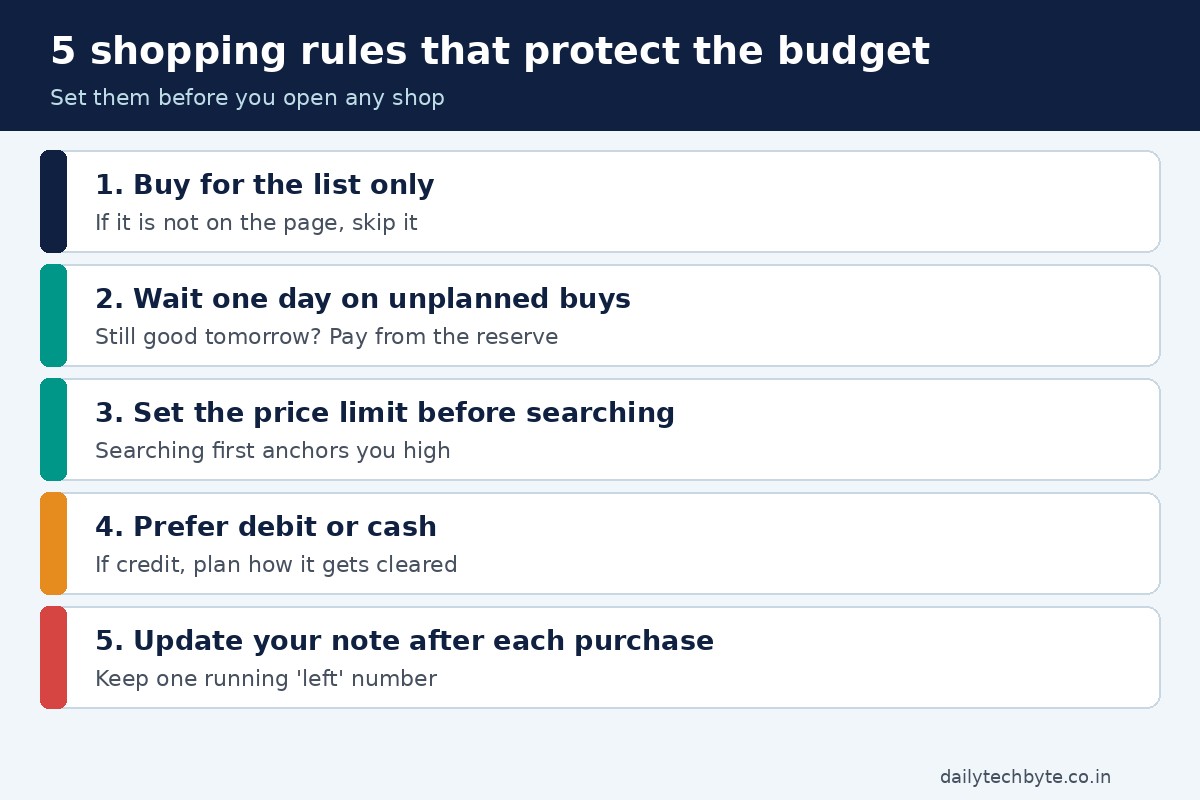
A few rules that make the budget survive contact with the sales:
- Buy for the list only. If it is not on the page, it does not go in the basket.
- Wait a day on anything not planned. An impulse that still looks good tomorrow can be paid for from the reserve.
- Set the price limit before you search. Searching first anchors you to whatever the first result costs.
- Pay with debit or cash where you can. If you do use credit, plan how it is cleared. My guide on whether 0% APR financing is a good deal shows how a deferred plan can quietly turn into debt.
- Check what you are buying. For second-hand gifts like electronics, my steps for checking a used phone before buying save you from a bad surprise.
Cheaper ways to keep gifts meaningful
A smaller budget does not mean a colder gift. Some ideas that have worked for people I know:
- Agree a spending cap with friends, or draw names so each person buys for one person instead of ten.
- Give time: a home-cooked meal, a day of babysitting, help with a tricky form.
- Pick a themed gift for a group, such as a mug and a good tea for every colleague, bought in one go.
- Make a shared family gift to one household instead of many small ones.
Say the plan out loud early. Most people are relieved when someone finally suggests a cap.
Gift card scams to watch for
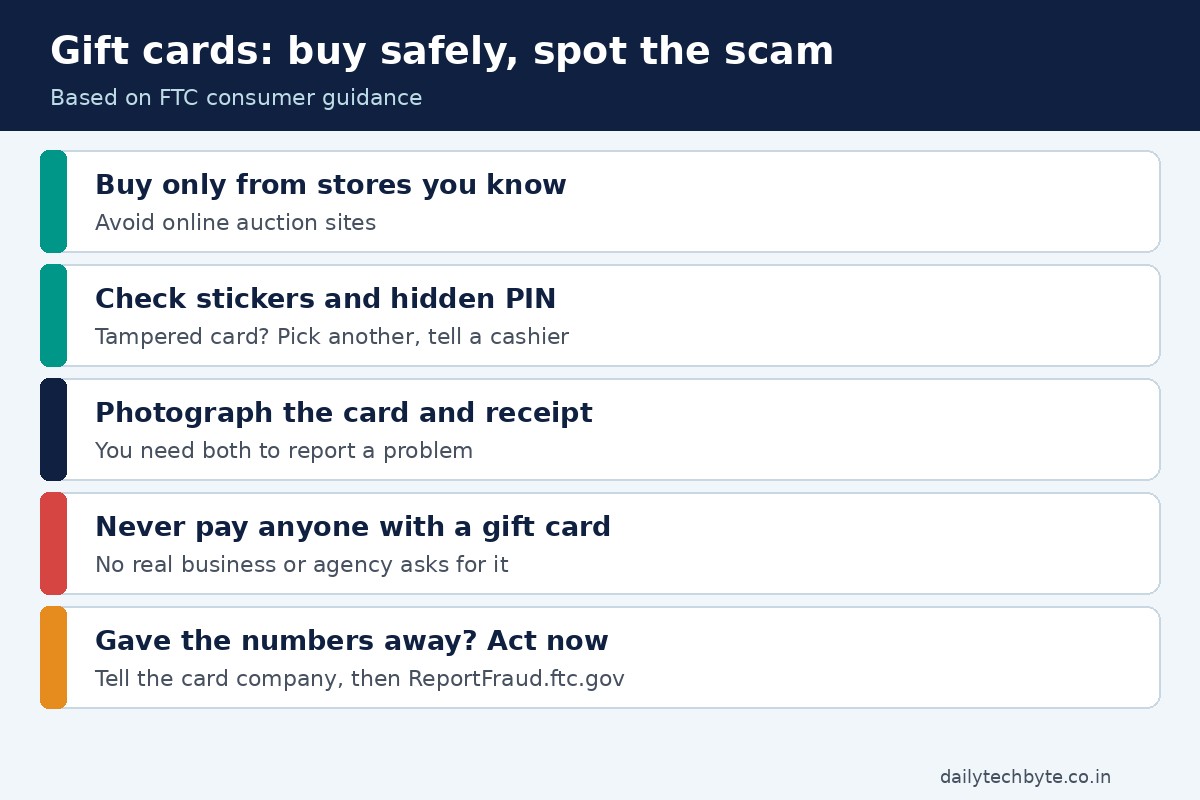
Gift cards are a handy last-minute gift and also the scammer’s favourite payment method. The US Federal Trade Commission says only scammers will tell you to buy a gift card and read them the numbers off the back. No real business or government agency will ever tell you to buy a gift card to pay them. That holds even if the message looks urgent or official.
If you buy cards as presents, a few habits help:
- Buy from stores you know, not from online auction sites, where cards may be fake or stolen.
- Check the protective stickers are on the card and the PIN is not showing. Pick another card if it looks tampered with, and show the damaged one to a cashier.
- Take a photo of the card and the store receipt on your phone. You need both to report a problem to the card company.
If you already gave the numbers to a scammer, report it to the gift card company straight away and ask for your money back, then tell the FTC through ReportFraud. Holiday time also brings fake delivery and “order problem” emails. My list of red flags in AI phishing emails will help you spot them.
Common mistakes to avoid
| Mistake | What happens | Fix |
|---|---|---|
| No total, only a vague idea | Spending keeps creeping up | Write one number first |
| Forgetting extras | Wrapping, postage and travel break the plan | Put them inside the total |
| No reserve | One surprise gift ruins the budget | Hold back about 10 percent |
| Paying with credit with no plan | Interest arrives in January | Decide how it is cleared before buying |
| Starting in December | Whole bill lands in one month | Save a little weekly or monthly |
The bottom line
A Christmas budget is a short document, not a sacrifice. One total, three price tiers, a reserve and a note you update after each purchase. That is it. Do it this weekend and the next seven weeks feel noticeably calmer.
If this helped, send it to someone who always says they will “figure it out in December”. Then keep an eye on our other money and safety guides here on DailyTechByte.
FAQ
How much should I spend on Christmas gifts?
There is no single right number. Use the spare cash left after rent, bills and savings, pick a total you can pay without a credit card, and divide it across your list in tiers.
How do I split a Christmas gift budget across people?
Sort people into three tiers: closest, friends and wider family, and small tokens. Give each tier one price per person, then add a reserve of about 10 percent for surprises.
When should I start saving for Christmas gifts?
As early as you can. Saving the same total over twelve months is much easier than paying in one month. For a $600 pot, that is $50 a month.
Is it safe to buy gift cards as presents?
Yes, if you buy from trusted stores, check the card is not tampered with, and keep a photo of the card and receipt. Never buy a card because someone tells you to pay them with one.
What if I overspend on gifts?
Pause, total what you have bought, and cover the gap from the reserve first. Then trim the remaining Tier 3 gifts or switch to shared or homemade ones instead of using credit.